๐Ÿ“ Arniko Highway, Lokanthali Bridge, Madhyapur Thimi, Bhaktapur, Near Kathmandu, Nepal โฐ OPD: Sunday โ€“ Friday: 7:00 AM โ€“ 7:00 PM | Saturday: 7:00 AM โ€“ 6:00 PM

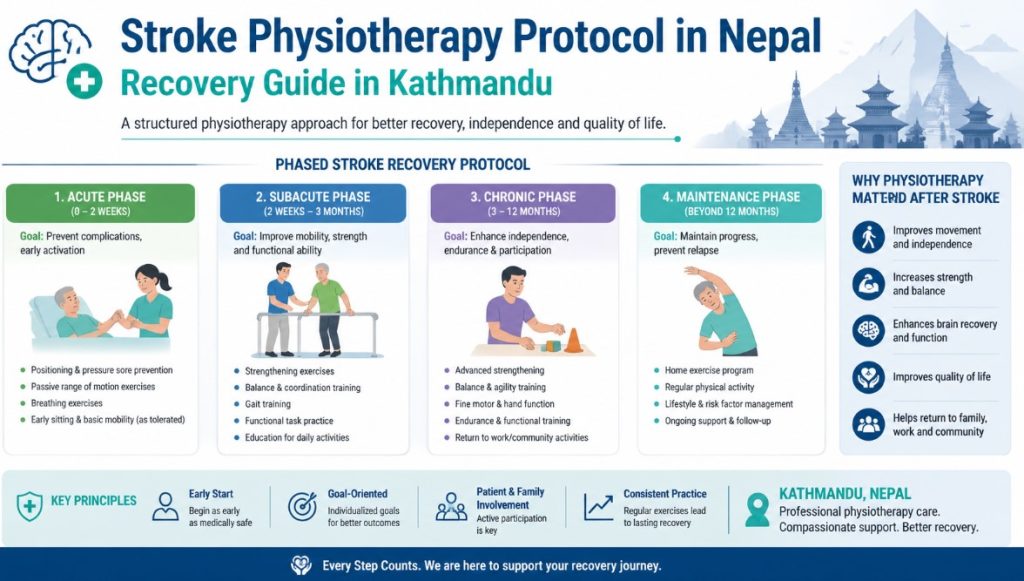
Stroke Physiotherapy Protocol in Nepal (Recovery Guide in Kathmandu)

Stroke rehabilitation requires expert care and a structured plan. In Nepal, clinics like Sakshyam Health Care & Rehabilitation Center is regularlgy providing the comprehensive physiotherapy and rehabilitation service with the complete stroke physiotherapy protocols .

This expert service has helped lots of stroke patients to regain independence and improve quality of life . Early stroke physiotherapy help each patient faster recovery and return back to normal life.

Stroke Rehabilitation in Kathmandu

In Kathmandu, physiotherapy centers are increasingly offering different type of neuro-rehabilitation services. Stroke recovery is based on Neuroplasticity, where the brain has to return and relearns lost functions through repeated therapy by the experts physiotherapist and treatment bey the neuro doctors

why physiotherapy is so important after stroke?

1. Helps regain movement and strength
After a stroke, the patient feel weakness and paralysis (most often on one side of the body). Physiotherapist help and uses guided exercises to rebuild muscle power and retrain the brain to control movement to normal life.

2. Promotes brain recovery (Improve neuroplasticity)
Neuroplasticity is important accept to brain. The brain has an ability called Neuroplasticityโ€”it can rewire itself and form new healthy connections. Correct Physiotherapy stimulates this process, helping patients relearn lost skills like walking, standing, and hands activities.

3. Improves balance and coordination
Stroke survivors often loss the balance and coordination due to damage in brain tissue. After stroke, they have to struggle with balance and this can increase the risk of falls. Physiotherapists train to maintain posture, stability, and coordination in order to help the patients move safely and confidently.

4. Prevents complications

Stroke people stay in bed for long time. Without movement, patients can develop stiffness, joint contractures, bed sores, and even serious conditions like Deep Vein Thrombosis. Physiotherapy with the planned rehabilitation protocol keeps the body active and reduces these types of risks.

5. Restores independence
The ultimate goal is to help patients return to daily activitiesโ€”walking, dressing, eating, and working. Physiotherapy gradually rebuilds these functional abilities.

6. Improves quality of life
Recovery is not just physical thing. Being able to move and returning of the function boosts confidence, mental health, and overall well-being which brings improvement in qulality of life

7. Supports long-term recovery
Stroke recovery depend on the what type of stroke and how much it has damaged the brain tissue . So, the recovery may take months or even more than years. Some strokes may not recover well. Physio rehabilitation provides a structured plan to ensure continuous improvement and prevent regression.

Phase-Wise Stroke Rehab Protocol

After stroke, the patient starts to recover. During the healing time , proper rehab physio should be palnned according to the stroke recovary phase

What are the Stroke Recovery Phases?

All together there are 4 phases of recovery after stroke

  • Acute Phase
  • early recovary phase
  • sub acute phase
  • chronic phase
stroke protocal, kathamandu nepal
stroke rehan rehab protocal, kathamandu nepal

Phase-Wise Stroke Phyiso Rehab Protocol

Acute Phase (0โ€“2 Weeks)

  • Bed positioning
  • Passive movement exercises
  • Breathing exercises

Early Recovery (2โ€“8 Weeks)

  • Sit-to-stand training
  • Assisted walking
  • Balance exercises

Subacute Phase (2โ€“6 Months)

  • Walking with support
  • Stair climbing
  • Hand function training

Chronic Phase (6+ Months)

  • Independent walking
  • Daily activity training
  • Fine motor skill improvement

Home-Based Stroke Rehab in Nepal

Many families with the stroke patient in Nepal prefer home-based stroke physiotherapy. Sakshyam provides guidance for:

  • Family-assisted exercises
  • Daily rehabilitation routines
  • Functional training at home

Why Choose Sakshyam Health Care?

Sakshyam Health Care & Rehabilitation Center offers :

  • Specialized neuro rehab programs
  • Personalized stroke recovery plans
  • Affordable physiotherapy services in Kathmandu
  • Planned Day care physio at center
  • Affordable home physiotherapy

Conclusion

A structured and planned stroke physiotherapy protocol in Nepal ensures better recovery outcomes. With expert neuro doctors and neuro specialized physiotherapist with the good nursing care from Sakshyam Health Care, patients can regain mobility, independence, and confidence.
Physio Rehabilitation Plan After PCLR Knee Surgery (Step-by-Step Recovery Guide)

PCLR rehab isnโ€™t just another routine after knee surgeryโ€”itโ€™s a phase-by-phase plan that helps in on rebuilding knee stability and strength in normal way. PCL rehab is not so much different as ACL Rehab Physio rehabilitation but if you to do physiotherapy after PCLR surgery, you need to be extra careful about protecting the back of your knee. That PCL graft after the PCLR surgery needs time without any extra stress.

Unlike other knee ligament injuries, PCL rehabilitation requires special care to avoid placing excessive stress on the healing graft. This guide outlines a complete, phase-wise recovery plan along with expert tips to ensure optimal healing.

What is PCLR Surgery ?

PCLR (Posterior Cruciate Ligament Reconstruction) is a surgical procedure performed in knee to repair a torn PCL, one of the key ligaments that stabilize the knee joint. The PCL prevents the tibia (shin bone) from moving backward relative to the femur (thigh bone).

After surgery, physiotherapy plays a critical role in regaining mobility, preventing stiffness, and rebuilding muscle strength.

What is PCLR Rehabilitation Protocol?

Physio rehabilitation after PCLR knee surgery is essential for restoring knee stability, strength, and full function. A well-structured posterior cruciate ligament (PCL) rehab protocol focuses on protecting the healing graft while gradually improving mobility and muscle control.

Immidiate after surgery of this PCL ligament, the physiotherapy has to be started as soon as possible. The Phyiso rehab protocoal has to be planned well so that the knee become normal working according to the time.

The best results after PCL surgery come from sticking with the definite plan, getting supervision with knee surgeon or orthopedic surgeon and experienced physiotherapist when you can, and making sure it fits your needs. Always need to know that the Consistency matters as well as the good technique and dedication.. And honestly, itโ€™s crucial not to push too soonโ€”give your knee the time it deserves.

Why Physiotherapy is Important After PCLR Surgery ?

A structured PCL rehab protocol helps:

  • Restore knee range of motion (ROM)
  • Strengthen associated muscles (quadriceps, glutes, calf)
  • Improve balance and coordination
  • Prevent complications like joint stiffness or instability
  • Reduce the risk of re-injury
  • return to normal life soon

Consistency in the physio rehabilitation is one of the most important factors for successful recovery from it.

PCL Rehab Timeline Overview

PhaseDurationFocus
Early Phase0โ€“4 weeksProtection & activation
Intermediate4โ€“12 weeksStrength & mobility
Strength Phase3โ€“6 monthsStability & function
Advanced6โ€“9 monthsAgility & coordination
Return to Sport9+ months
Full recovery

Phase-Wise Physio Rehabilitation Plan After PCLR Knee Surgery

After PCLR surgery, healing to normal can be divided to 4 phases(Phase 1( to Phase 5) from early recovary to Normal .

Let know the Physio Rehabilitation Plan as per the recovery phase and plan the rehabilitation as following for good and faster recovery with goals with key guidelines and recommended exercises.

Phase 1: Early Recovery (0โ€“4 Weeks)

Goals:

  • Reduce pain and swelling
  • Protect the surgical graft
  • Restore full knee extension
  • Activate quadriceps muscles

Key Guidelines:

  • Use a knee brace as prescribed
  • Limit knee bending (flexion)
  • Avoid hamstring activation

Recommended Exercises:

  • Quadriceps sets
  • Straight leg raises
  • Ankle pumps
  • Gentle passive range of motion exercises

During this early phase, you have to focus is on healing and preventing complications rather than aggressive movement. Aggressive movement is not done at this stage. If pain aggravates or any unusual happen then need to stop for time being.


Phase 2: Intermediate Phase (4โ€“12 Weeks)

Goals:

  • Improve knee flexion gradually
  • Begin controlled weight-bearing
  • Build basic strength

Key Guidelines:

  • Avoid deep squats
  • Delay hamstring strengthening initially
  • Progress slowly

Recommended Exercises:

  • Mini squats
  • Step-ups (low height)
  • Stationary cycling (low resistance)
  • Balance exercises

In this intermediate phage, focuses on rebuilding strength while still protecting the ligament.


Phase 3: Strengthening Phase (3โ€“6 Months)

Goals:

  • Increase muscle strength
  • Improve joint stability
  • Enhance functional movement

Recommended Exercises:

  • Lunges
  • Leg press (controlled range)
  • Glute bridges
  • Core strengthening
  • Proprioception and balance drills

At this stage, patients start regain confidence in movement of limbs and begin more functional activities.


Phase 4: Advanced Training (6โ€“9 Months)

Goals:

  • Prepare for return to activity
  • Improve coordination and agility
  • Restore full functional capacity

Recommended Exercises:

  • Light jogging
  • Agility drills
  • Plyometric exercises (jump training)
  • Direction-change drills

Progression depends on strength, stability, and absence of pain or swelling.


Phase 5: Return to Sport (9+ Months)

Goals:

  • Safe return to sports
  • Prevent re-injury
  • Achieve full performance level

Criteria for Return:

  • Strength symmetry between both legs
  • Good balance and control
  • No pain or swelling
  • Clearance from physiotherapist or surgeon

Exercises to Avoid After PCLR Surgery

To protect the healing ligament, avoid:

  • Early hamstring strengthening
  • Deep squats (early phase)
  • Running too soon
  • Sudden pivoting or twisting movements

These activities can place excessive stress on the PCL graft and delay recovery.


Tips for Faster Recovery After PCL Reconstruction

  • Follow your physiotherapistโ€™s plan strictly
  • Avoid skipping rehabilitation phases
  • Maintain consistency in exercises
  • Use proper technique during workouts
  • Rest adequately to allow healing
  • Monitor swelling and pain levels

Recovery is gradual, and pushing too fast can increase the risk of complications.


Common Challenges During PCL Rehab

Patients may experience:

  • Knee stiffness
  • Muscle weakness
  • Fear of movement
  • Delayed progress

These challenges are normal and can be managed with proper guidance and patience.


FAQs: PCLR Rehabilitation

How long does PCLR rehab take?

Recovery typically takes 6 to 9 months, but full return to sports may take up to 12 months depending on individual progress.

When can I walk after PCL surgery?

Walking with support usually begins within a few weeks, depending on your surgeonโ€™s protocol.

Can I do home-based rehab after PCLR?

Yes, many exercises can be done at home, but regular guidance from a physiotherapist is recommended.

Is PCL rehab different from ACL rehab?

Yes, PCL rehab focuses more on protecting the posterior knee and delaying hamstring exercises.


Conclusion

A well-structured physio rehabilitation plan after PCLR knee surgery is essential for a safe and successful recovery. By following a phase-wise protocol, staying consistent, and avoiding early overload, patients can regain strength, stability, and confidence in their knee.

Whether your goal is returning to sports or simply resuming daily activities, proper physiotherapy is the key to long-term success after PCL reconstruction.

Knee Pain Treatment and Rehabilitation Guide: Expert Tips for Fast Recovery

Knee pain is a common problem that affects people of all ages. It can be caused by an injury overusing your knee or just getting older.

The good news is that with the treatment and rehab plan you can get better quickly and avoid problems in the future.

This guide will cover everything you need to know about knee pain, including what causes it how to treat it exercises to help and expert advice, on how to get to full strength.

Common Causes of Knee Pain

Understanding the cause of the knee pain is the first step toward effective treatment. The most comman casuse of knee pain is different in each and every person. Any way some of the main cause of it is due to age related, trauma muscle weakness, hormonal changes and so on. Some of the main cause are stated as following

๐Ÿง  Major Causes of Knee Pain

  • Ligament injuries (ACL, MCL tears)
  • Meniscus injuries
  • Arthritis (osteoarthritis, rheumatoid arthritis)
  • Tendinitis (jumperโ€™s knee)
  • Muscle weakness or imbalance

Knee Symptoms You Shouldnโ€™t Ignore

Most of the people have knee pain and have symptoms of it. Some of the key symptoms that you should be concerned . The red flags of knee pain should not be ignored. These key symptoms of knee pain should not be ignored

  • Persistent pain or swelling
  • Stiffness and reduced mobility
  • Knee instability or โ€œgiving wayโ€
  • Pain during walking, climbing stairs, or bending
  • Pain with fever and weakness

If these above symptoms worsen and got getting better, you have to seek and consult the orthopedic doctor as soon as possible. .

๐Ÿฅ Knee Pain Treatment Options

๐Ÿ’Š 1. Medical Treatment

  • Pain relievers (as prescribed)
  • Anti-inflammatory medications
  • In severe cases, injections or surgery

๐Ÿง˜ 2. Physiotherapy Treatment

A structured physiotherapy plan is the most effective long-term solution.

Key Components:

  • Pain management techniques
  • Strengthening exercises
  • Mobility and flexibility training
  • Posture correction

๐Ÿ  3. Home-Based Rehabilitation

Many patients in Nepal prefer home-based knee rehabilitation due to convenience.

Basic Home Care:

  • Rest and avoid overuse
  • Ice therapy (15โ€“20 minutes daily)
  • Compression and elevation

๐Ÿ“… Knee Rehabilitation Exercise Plan

๐ŸŸข Early Stage (Pain Relief)

  • Heel slides
  • Quadriceps sets
  • Straight leg raises

๐ŸŸก Mid Stage (Strength Building)

  • Hamstring curls
  • Wall sits
  • Step-ups

๐ŸŸ  Advanced Stage (Stability & Function)

  • Lunges
  • Squats
  • Balance training

๐Ÿฅ— Nutrition for Knee Recovery

Support healing with the right diet:

  • Protein (muscle repair)
  • Calcium & Vitamin D (bone strength)
  • Omega-3 fatty acids (reduce inflammation)
  • Hydration for joint health

โš ๏ธ Common Mistakes to Avoid

  • Ignoring pain signals
  • Skipping warm-up exercises
  • Overtraining too soon
  • Poor exercise technique

Consistency and proper form are key to recovery.


๐Ÿ‘จโ€โš•๏ธ When to See a Physiotherapist?

Consult a professional if:

  • Pain lasts more than a few weeks
  • Swelling increases
  • You experience instability
  • Recovery is slow or worsening

๐Ÿ“ Knee Pain Treatment in Nepal

In Nepal, physiotherapy services are growing rapidly, especially in urban areas like Kathmandu and Bhaktapur. Combining home-based rehab with expert supervision gives the best results.


๐Ÿ”— Related Topics (Internal Linking Opportunities)

  • Home-Based ACL Rehab Plan in Nepal
  • Post ACL Surgery Rehab Plan
  • Best Physiotherapy in Nepal
  • Sports Injury Physiotherapy Nepal

โ“ Frequently Asked Questions (FAQs)


โœ… Final Thoughts

A well-planned knee pain treatment and rehabilitation guide can significantly improve recovery outcomes. Whether youโ€™re dealing with a minor injury or chronic pain, combining physiotherapy, exercise, and proper care will help you regain mobility and live pain-free.

Home-Based ACL Rehab Plan in Nepal

After the Surgery of ACL( anterior cruciate Ligament) you need to have continue physiotherapy at home too. The attending physiotherapist should be aware about it and have to guide the patient and patient party regarding it.

The first 2, 3 weeks is one of the important part of physiotherapy and then after, you should encourage the ACLR patient for doing phyiso at home. The home based rehab should be planned accordingly in order to continue according to rehab protocol

Hereโ€™s a home-based ACL rehab plan (no gym, minimal equipment) built from that protocol. This protocol uses the local things easily available in Nepalโ€”floor space, a chair, stairs, and optional resistance bands.

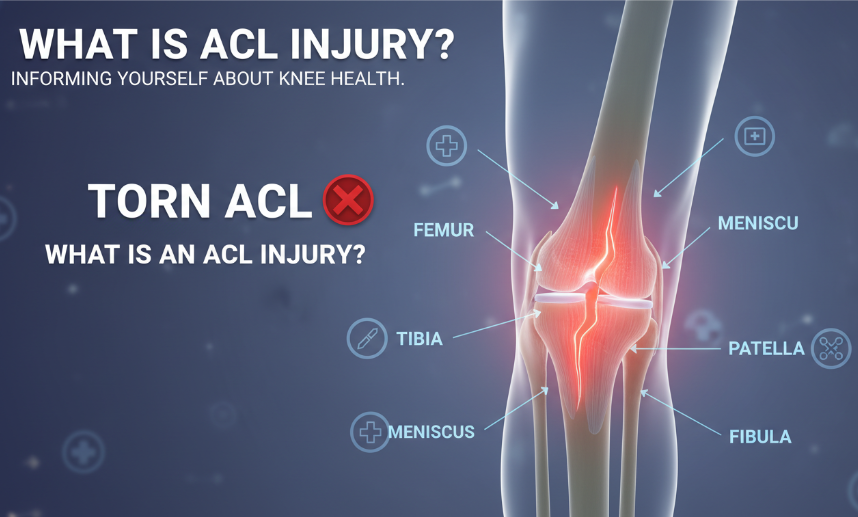
What is an ACL Injury?

The Anterior Cruciate Ligament (ACL) is a key ligament in the knee hat stabilizes your knee joint. ACL injury is most common among the athletes especially that involve running and aggress.

Generally the ACL injuries often occur during sports, sudden twisting movements and accidents. Some time the pathological disease can also cause the degenerative ACL injury

Common Symptoms:

  • Knee pain and swelling
  • Instability while walking
  • Reduced range of motion
  • Sound in joint

๐Ÿง  Why Choose a Home-Based ACL Rehab Plan?

A home-based ACL recovery plan is ideal as becasue of accessibility of the rehab center and cost-effectiveness

The major Benefits include:

  • Convenient and flexible schedule
  • Less treatment costs
  • Personalized pace of recovery and homely environment
  • Reduced travel cost

โš ๏ธ However, proper guidance from a registered physiotherapist (even occasionally) and treating doctor is strongly recommended.


๐Ÿ  Home-Based ACL Rehab Plan- Step by Step

๐Ÿ”น Phase 1: 0โ€“2 Weeks (Pain & Motion Phase)

Goals:to reduce swelling, regain extension, activate muscles

Do daily (2โ€“3x/day):

  • Quad sets โ€“ 3ร—15
  • Straight leg raises โ€“ 3ร—10
  • Heel slides โ€“ 3ร—10
  • Ankle pumps โ€“ 3ร—20

Supportive care:

  • Ice: 15โ€“20 min, 3โ€“4x/day
  • Leg elevated when resting
  • Use brace/crutches if prescribed

Focus:
๐Ÿ‘‰ Get knee fully straight (very important)


๐Ÿ”น Phase 2: 2โ€“6 Weeks (Movement + Basic Strength)

Goals: restore ROM, walk normally

Do 1โ€“2x/day:

  • Heel slides โ†’ aim full bend โ€“ 3ร—15
  • Mini squats (holding chair) โ€“ 3ร—10
  • Sit-to-stand (from chair) โ€“ 3ร—10
  • Standing hamstring curls โ€“ 3ร—12
  • Single-leg balance (hold wall) โ€“ 3ร—20 sec

Add:

  • Walking practice (normal gait)
  • Stationary cycling (if available)

Focus:
๐Ÿ‘‰ No limping while walking


๐Ÿ”น Phase 3: 6โ€“12 Weeks (Strength Phase)

Goals: build strength + control

Do 4โ€“5 days/week:

  • Squats (progress depth) โ€“ 3ร—12
  • Forward lunges โ€“ 3ร—10 each leg
  • Step-ups (use stairs) โ€“ 3ร—12
  • Glute bridges โ€“ 3ร—15
  • Single-leg balance (no support) โ€“ 3ร—30 sec

Optional (if you have band):

  • Resistance band leg press
  • Side-walks with band

Focus:
๐Ÿ‘‰ Control + symmetry (both legs similar)


๐Ÿ”น Phase 4: 3โ€“6 Months (Running Prep)

Goals: return to dynamic movement

Do 4โ€“5 days/week:

  • Jump squats (small jumps) โ€“ 3ร—8
  • Step-downs (stairs) โ€“ 3ร—10
  • Side lunges โ€“ 3ร—10
  • Single-leg sit-to-stand โ€“ 3ร—8

Start:

  • Light jogging (flat ground)
  • Brisk walking โ†’ jogging progression

Focus:
๐Ÿ‘‰ No pain/swelling after activity


๐Ÿ”น Phase 5: 6โ€“9+ Months (Return to Sport)

Goals: full function

Do 4โ€“6 days/week:

  • Single-leg hops โ€“ 3ร—8
  • Forward/backward running drills
  • Zig-zag / agility drills (use cones or bottles)
  • Sport-specific drills (football, trekking, etc.)

Focus:
๐Ÿ‘‰ Confidence + stability during movement


๐Ÿงฐ Simple Equipment You Can Use at Home

These most common equipment found at home can be used during the home physiotherapy

  • Chair โ†’ squats, sit-to-stand
  • Stairs โ†’ step-ups
  • Water bottles โ†’ balance markers
  • Resistance band (optional but helpful)

โš ๏ธ Things to remember while doing home ACL

  • Mild discomfort = OK,
  • sharp pain = stop phyiso
  • Swelling next day = you did too much
  • Progress slowly (donโ€™t skip phases)
  • Consistency > intensity

Nutrition for Faster ACL Recovery

Healing isnโ€™t just about exerciseโ€”nutrition plays a major role after th ACL Surgery. Food with good nutrients is being recommended for after ACL recovery and it also plays good role during the physio rehabilitation

As suggestion you can Eat More:

  • Protein (eggs, chicken, lentils)
  • Calcium (milk, yogurt)
  • Omega-3 (nuts, seeds)
  • Vitamin C (fruits for tissue repair)

PhaseTimelineGoalsRecommended ExercisesPrecautions
Phase 1: Initial RecoveryWeek 1โ€“2Reduce pain & swelling, protect graftAnkle pumps, heel slides, quad setsAvoid weight-bearing, use crutches, apply ice regularly
Phase 2: Early StrengtheningWeek 3โ€“6Restore range of motion, begin muscle activationStraight leg raises, hamstring curls, mini squatsAvoid twisting movements, do not overstrain knee
Phase 3: Advanced StrengthWeek 7โ€“12Improve strength, balance, and stabilityLunges, step-ups, resistance band exercises, balance drillsMaintain proper form, avoid sudden impact activities
Phase 4: Functional Training3โ€“6 MonthsReturn to normal activity and sports readinessLight jogging, agility drills, sport-specific exercisesGradual progression, consult physiotherapist before


sports

โœ… Final Thoughts

A well-designed home-based ACL rehab plan in Nepal can lead to a full and successful recovery when followed consistently. Focus on gradual progress, proper technique, and listening to your body.

Recovery takes timeโ€”but with discipline and the right approach, you can regain full strength and return to your normal activities.

Frequently Asked Questions (FAQs)

How long does ACL recovery take at home?
ACL recovery at home typically takes 3 to 6 months depending on the severity of the injury and consistency of rehabilitation exercises.
Can I do ACL rehab at home without a physiotherapist?
Yes, you can follow a structured home-based ACL rehab plan, but occasional guidance from a physiotherapist is recommended for safe recovery.
What are the best exercises for ACL recovery at home?
Effective exercises include ankle pumps, heel slides, straight leg raises, hamstring curls, and step-ups as your recovery progresses.
Is walking good for ACL injury recovery?
Walking can help recovery, but it should be introduced gradually once pain and swelling are reduced.
When can I return to sports after an ACL injury?
Most people return to sports after 3 to 6 months, once full strength, balance, and stability are restored and with medical approval.

ACL Rehab Protocol after ACL Surgery in Nepal

ACL rehab protocols used in Nepal are generally done after the ACLR ( Anterior Cruciate Ligament Reconstrution ) surgery and this phyio rehabilitation are generally the same evidence-based, phase-wise protocols used worldwid

THe steps and the rehabiliation protocoal are adapted by physiotherapists depending on your surgeon, graft type, and access to rehab facilities as per need.

Hereโ€™s a clear, practical ACL rehabilitation protocol (used in most Nepali physio rehabiliation centers and phyisotherapy clinics too):


๐Ÿฆต ACL Rehab Protocol (Step-by-step)

๐Ÿ”น Phase 1: Immediate Post-op (0โ€“2 weeks) Physio Rehab

Goals: To reduce swelling, regain knee extension, activate muscles

What you have to do:

  • RICE (rest, ice, compression, elevation)
  • Knee brace + crutches (as advised)
  • Gentle exercises:
    • Quadriceps sets
    • Straight leg raises
    • Heel slides
  • Try to achieve:
    • Full knee extension
    • ~70โ€“90ยฐ flexion

๐Ÿ‘‰ Early motion + weight bearing (as tolerated) is encouraged to avoid stiffness


๐Ÿ”น Phase 2: Early Rehab (2โ€“6 weeks) Phyiso

Goals: TO improve ROM, start strength, normalize walking

Core Exercises:

  • Stationary cycling
  • Closed-chain exercises (mini squats, step-ups)
  • Balance training
  • Gradually stop crutches and
  • Partial weight bearing followed by full weight bearing

๐Ÿ‘‰ By ~6 weeks: YOu have to Aim for near full ROM and normal gait


๐Ÿ”น Phase 3: Strength & Control (6โ€“12 weeks) Phyiso Rehab

Goals: To build muscle strength + stability of the Join

Core Exercises:

  • Leg press, lunges
  • Hamstring curls
  • Core & hip strengthening
  • Proprioception (balance boards)

๐Ÿ‘‰ Focus shifts to endurance and neuromuscular control


๐Ÿ”น Phase 4: Advanced Training (3โ€“6 months)

Goals: prepare for running & sports

Core Exercises:

  • Jogging โ†’ running progression
  • Plyometrics (jumping drills)
  • Agility drills

๐Ÿ‘‰ Running starts only when:

  • Full ROM
  • No swelling
  • Strength โ‰ฅ ~80% of other leg

๐Ÿ”น Phase 5: Return to Sport (6โ€“9+ months) Phyiso

Goals: safe return without re-injury

Criteria:

  • Strength symmetry (โ‰ฅ90โ€“95%)
  • Good balance & hop tests
  • No pain/swelling

๐Ÿ‘‰ Aftere completion of all the rehab phyiso for post ACLR Most athletes return around 6โ€“9 months (sometimes up to 12 months)


โš ๏ธ Important Advice

  • Rehab is criteria-based, not just time-based
  • Donโ€™t rush phases โ†’ increases re-tear risk
  • Consistency matters more than intensity
  • Always follow your surgeon + physio plan

๐Ÿฆต ACL Rehab Protocol (Table Format)

PhaseTimelineGoalsKey Exercises / ActivitiesCriteria to Progress
Phase 1: Immediate Post-op0โ€“2 weeks– Reduce swelling
– Restore full extension
– Activate quadriceps
– RICE (rest, ice, compression, elevation)
– Quad sets
– Straight leg raises
– Heel slides
– Ankle pumps
– Minimal swelling
– Full knee extension
– Flexion ~70โ€“90ยฐ
– Good quad activation
Phase 2: Early Rehab2โ€“6 weeks– Improve ROM
– Normalize walking
– Begin strength
– Stationary cycling
– Mini squats
– Step-ups
– Balance exercises
– Gait training
– Full/near full ROM
– Walking without crutches
– Minimal pain/swelling
Phase 3: Strength & Control6โ€“12 weeks– Build strength
– Improve stability & control
– Leg press
– Lunges
– Hamstring curls
– Core strengthening
– Balance board training
– Strength โ‰ฅ70% of other leg
– Good balance
– No swelling after exercise
Phase 4: Advanced Training3โ€“6 months– Prepare for running
– Improve agility
– Jogging progression
– Plyometrics (jumping)
– Agility drills
– Sport-specific drills
– Full ROM
– Strength โ‰ฅ80%
– No pain/swelling
Phase 5: Return to Sport6โ€“9+ months– Safe return to sport
– Prevent re-injury
– Full training drills
– Cutting/pivoting drills
– Functional testing
– Strength โ‰ฅ90โ€“95%
– Pass hop tests
– No instability

๐Ÿ‡ณ๐Ÿ‡ต Whatโ€™s specific in Nepal?

In Nepal, the phyisotherapy protocol after ACLR surgery is similar, but differences may include:

  • More manual therapy + exercise-based rehab
  • Limited access to advanced equipment (isokinetic machines, Alter-G treadmill)
  • Greater reliance on:
    • Therabands
    • Bodyweight exercises
    • Home programs

Top centers in Kathmandu (like sports physio clinics) usually follow international guidelines (Aspetar / Melbourne protocols).

๐Ÿ“ž Call Now ๐Ÿ’ฌ WhatsApp ๐Ÿ“… Book Bed / OPD