📍 Arniko Highway, Lokanthali Bridge, Madhyapur Thimi, Bhaktapur, Near Kathmandu, Nepal ⏰ OPD: Sunday – Friday: 7:00 AM – 7:00 PM | Saturday: 7:00 AM – 6:00 PM

Stroke Physiotherapy Protocol in Nepal (Recovery Guide in Kathmandu)

Stroke rehabilitation requires expert care and a structured plan. In Nepal, clinics like Sakshyam Health Care & Rehabilitation Center is regularlgy providing the comprehensive physiotherapy and rehabilitation service with the complete stroke physiotherapy protocols .

This expert service has helped lots of stroke patients to regain independence and improve quality of life . Early stroke physiotherapy help each patient faster recovery and return back to normal life.

Stroke Rehabilitation in Kathmandu

In Kathmandu, physiotherapy centers are increasingly offering different type of neuro-rehabilitation services. Stroke recovery is based on Neuroplasticity, where the brain has to return and relearns lost functions through repeated therapy by the experts physiotherapist and treatment bey the neuro doctors

why physiotherapy is so important after stroke?

1. Helps regain movement and strength
After a stroke, the patient feel weakness and paralysis (most often on one side of the body). Physiotherapist help and uses guided exercises to rebuild muscle power and retrain the brain to control movement to normal life.

2. Promotes brain recovery (Improve neuroplasticity)
Neuroplasticity is important accept to brain. The brain has an ability called Neuroplasticity—it can rewire itself and form new healthy connections. Correct Physiotherapy stimulates this process, helping patients relearn lost skills like walking, standing, and hands activities.

3. Improves balance and coordination
Stroke survivors often loss the balance and coordination due to damage in brain tissue. After stroke, they have to struggle with balance and this can increase the risk of falls. Physiotherapists train to maintain posture, stability, and coordination in order to help the patients move safely and confidently.

4. Prevents complications

Stroke people stay in bed for long time. Without movement, patients can develop stiffness, joint contractures, bed sores, and even serious conditions like Deep Vein Thrombosis. Physiotherapy with the planned rehabilitation protocol keeps the body active and reduces these types of risks.

5. Restores independence
The ultimate goal is to help patients return to daily activities—walking, dressing, eating, and working. Physiotherapy gradually rebuilds these functional abilities.

6. Improves quality of life
Recovery is not just physical thing. Being able to move and returning of the function boosts confidence, mental health, and overall well-being which brings improvement in qulality of life

7. Supports long-term recovery
Stroke recovery depend on the what type of stroke and how much it has damaged the brain tissue . So, the recovery may take months or even more than years. Some strokes may not recover well. Physio rehabilitation provides a structured plan to ensure continuous improvement and prevent regression.

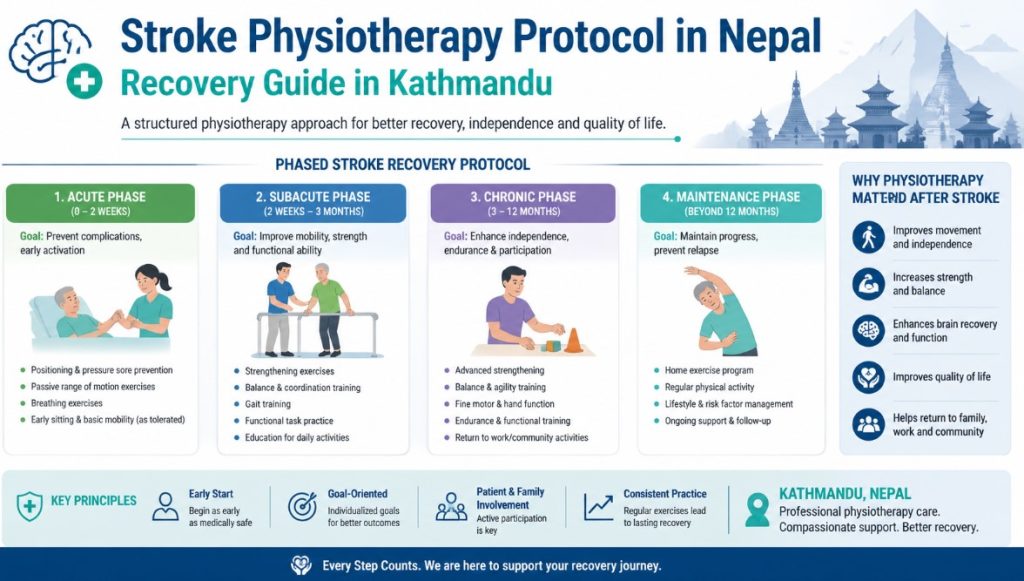
Phase-Wise Stroke Rehab Protocol

After stroke, the patient starts to recover. During the healing time , proper rehab physio should be palnned according to the stroke recovary phase

What are the Stroke Recovery Phases?

All together there are 4 phases of recovery after stroke

  • Acute Phase
  • early recovary phase
  • sub acute phase
  • chronic phase
stroke protocal, kathamandu nepal
stroke rehan rehab protocal, kathamandu nepal

Phase-Wise Stroke Phyiso Rehab Protocol

Acute Phase (0–2 Weeks)

  • Bed positioning
  • Passive movement exercises
  • Breathing exercises

Early Recovery (2–8 Weeks)

  • Sit-to-stand training
  • Assisted walking
  • Balance exercises

Subacute Phase (2–6 Months)

  • Walking with support
  • Stair climbing
  • Hand function training

Chronic Phase (6+ Months)

  • Independent walking
  • Daily activity training
  • Fine motor skill improvement

Home-Based Stroke Rehab in Nepal

Many families with the stroke patient in Nepal prefer home-based stroke physiotherapy. Sakshyam provides guidance for:

  • Family-assisted exercises
  • Daily rehabilitation routines
  • Functional training at home

Why Choose Sakshyam Health Care?

Sakshyam Health Care & Rehabilitation Center offers :

  • Specialized neuro rehab programs
  • Personalized stroke recovery plans
  • Affordable physiotherapy services in Kathmandu
  • Planned Day care physio at center
  • Affordable home physiotherapy

Conclusion

A structured and planned stroke physiotherapy protocol in Nepal ensures better recovery outcomes. With expert neuro doctors and neuro specialized physiotherapist with the good nursing care from Sakshyam Health Care, patients can regain mobility, independence, and confidence.
Home-Based ACL Rehab Plan in Nepal

After the Surgery of ACL( anterior cruciate Ligament) you need to have continue physiotherapy at home too. The attending physiotherapist should be aware about it and have to guide the patient and patient party regarding it.

The first 2, 3 weeks is one of the important part of physiotherapy and then after, you should encourage the ACLR patient for doing phyiso at home. The home based rehab should be planned accordingly in order to continue according to rehab protocol

Here’s a home-based ACL rehab plan (no gym, minimal equipment) built from that protocol. This protocol uses the local things easily available in Nepal—floor space, a chair, stairs, and optional resistance bands.

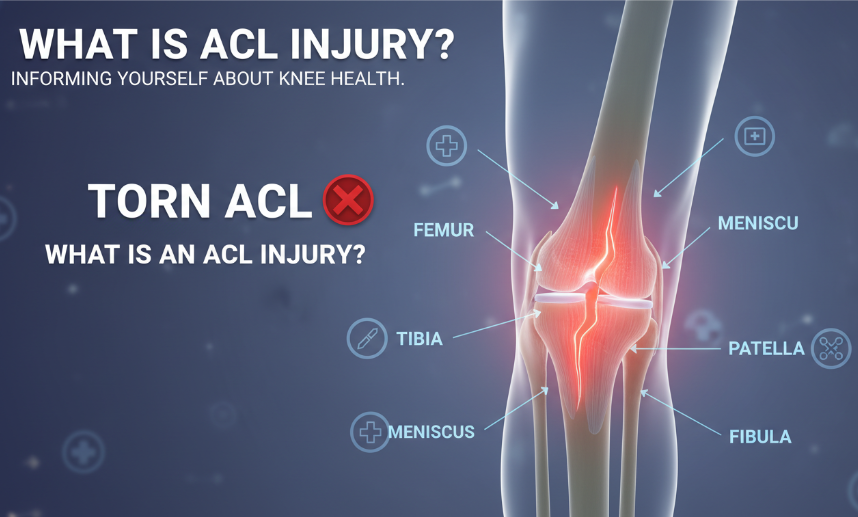
What is an ACL Injury?

The Anterior Cruciate Ligament (ACL) is a key ligament in the knee hat stabilizes your knee joint. ACL injury is most common among the athletes especially that involve running and aggress.

Generally the ACL injuries often occur during sports, sudden twisting movements and accidents. Some time the pathological disease can also cause the degenerative ACL injury

Common Symptoms:

  • Knee pain and swelling
  • Instability while walking
  • Reduced range of motion
  • Sound in joint

🧠 Why Choose a Home-Based ACL Rehab Plan?

A home-based ACL recovery plan is ideal as becasue of accessibility of the rehab center and cost-effectiveness

The major Benefits include:

  • Convenient and flexible schedule
  • Less treatment costs
  • Personalized pace of recovery and homely environment
  • Reduced travel cost

⚠️ However, proper guidance from a registered physiotherapist (even occasionally) and treating doctor is strongly recommended.


🏠 Home-Based ACL Rehab Plan- Step by Step

🔹 Phase 1: 0–2 Weeks (Pain & Motion Phase)

Goals:to reduce swelling, regain extension, activate muscles

Do daily (2–3x/day):

  • Quad sets – 3×15
  • Straight leg raises – 3×10
  • Heel slides – 3×10
  • Ankle pumps – 3×20

Supportive care:

  • Ice: 15–20 min, 3–4x/day
  • Leg elevated when resting
  • Use brace/crutches if prescribed

Focus:
👉 Get knee fully straight (very important)


🔹 Phase 2: 2–6 Weeks (Movement + Basic Strength)

Goals: restore ROM, walk normally

Do 1–2x/day:

  • Heel slides → aim full bend – 3×15
  • Mini squats (holding chair) – 3×10
  • Sit-to-stand (from chair) – 3×10
  • Standing hamstring curls – 3×12
  • Single-leg balance (hold wall) – 3×20 sec

Add:

  • Walking practice (normal gait)
  • Stationary cycling (if available)

Focus:
👉 No limping while walking


🔹 Phase 3: 6–12 Weeks (Strength Phase)

Goals: build strength + control

Do 4–5 days/week:

  • Squats (progress depth) – 3×12
  • Forward lunges – 3×10 each leg
  • Step-ups (use stairs) – 3×12
  • Glute bridges – 3×15
  • Single-leg balance (no support) – 3×30 sec

Optional (if you have band):

  • Resistance band leg press
  • Side-walks with band

Focus:
👉 Control + symmetry (both legs similar)


🔹 Phase 4: 3–6 Months (Running Prep)

Goals: return to dynamic movement

Do 4–5 days/week:

  • Jump squats (small jumps) – 3×8
  • Step-downs (stairs) – 3×10
  • Side lunges – 3×10
  • Single-leg sit-to-stand – 3×8

Start:

  • Light jogging (flat ground)
  • Brisk walking → jogging progression

Focus:
👉 No pain/swelling after activity


🔹 Phase 5: 6–9+ Months (Return to Sport)

Goals: full function

Do 4–6 days/week:

  • Single-leg hops – 3×8
  • Forward/backward running drills
  • Zig-zag / agility drills (use cones or bottles)
  • Sport-specific drills (football, trekking, etc.)

Focus:
👉 Confidence + stability during movement


🧰 Simple Equipment You Can Use at Home

These most common equipment found at home can be used during the home physiotherapy

  • Chair → squats, sit-to-stand
  • Stairs → step-ups
  • Water bottles → balance markers
  • Resistance band (optional but helpful)

⚠️ Things to remember while doing home ACL

  • Mild discomfort = OK,
  • sharp pain = stop phyiso
  • Swelling next day = you did too much
  • Progress slowly (don’t skip phases)
  • Consistency > intensity

Nutrition for Faster ACL Recovery

Healing isn’t just about exercise—nutrition plays a major role after th ACL Surgery. Food with good nutrients is being recommended for after ACL recovery and it also plays good role during the physio rehabilitation

As suggestion you can Eat More:

  • Protein (eggs, chicken, lentils)
  • Calcium (milk, yogurt)
  • Omega-3 (nuts, seeds)
  • Vitamin C (fruits for tissue repair)

PhaseTimelineGoalsRecommended ExercisesPrecautions
Phase 1: Initial RecoveryWeek 1–2Reduce pain & swelling, protect graftAnkle pumps, heel slides, quad setsAvoid weight-bearing, use crutches, apply ice regularly
Phase 2: Early StrengtheningWeek 3–6Restore range of motion, begin muscle activationStraight leg raises, hamstring curls, mini squatsAvoid twisting movements, do not overstrain knee
Phase 3: Advanced StrengthWeek 7–12Improve strength, balance, and stabilityLunges, step-ups, resistance band exercises, balance drillsMaintain proper form, avoid sudden impact activities
Phase 4: Functional Training3–6 MonthsReturn to normal activity and sports readinessLight jogging, agility drills, sport-specific exercisesGradual progression, consult physiotherapist before


sports

✅ Final Thoughts

A well-designed home-based ACL rehab plan in Nepal can lead to a full and successful recovery when followed consistently. Focus on gradual progress, proper technique, and listening to your body.

Recovery takes time—but with discipline and the right approach, you can regain full strength and return to your normal activities.

Frequently Asked Questions (FAQs)

How long does ACL recovery take at home?
ACL recovery at home typically takes 3 to 6 months depending on the severity of the injury and consistency of rehabilitation exercises.
Can I do ACL rehab at home without a physiotherapist?
Yes, you can follow a structured home-based ACL rehab plan, but occasional guidance from a physiotherapist is recommended for safe recovery.
What are the best exercises for ACL recovery at home?
Effective exercises include ankle pumps, heel slides, straight leg raises, hamstring curls, and step-ups as your recovery progresses.
Is walking good for ACL injury recovery?
Walking can help recovery, but it should be introduced gradually once pain and swelling are reduced.
When can I return to sports after an ACL injury?
Most people return to sports after 3 to 6 months, once full strength, balance, and stability are restored and with medical approval.

Stroke Rehabilitation at Sakshyam Health Care and Rehabilitation Center, Bhaktapur, Kathmandu Nepal

Sakshyam Health Care and Rehabilitation Center in Lokanthali, Bhaktapur, Nepal, we recognize the annoying situations stroke survivors fac and we are cener for the neurological physiotherapy Kathmandu .

Our dedicated stroke rehabilitation program is designed to restore mobility, independence, and hope, helping patients reclaim their lives with compassionate, expert care. As a leading physiotherapy and rehabilitation center in Nepal, we combine advanced techniques with a humanized approach to support the stroke recovery journey.

Why Post-Stroke Recovery Therapy is Necessary?

Post stroke physiotherapy is not only the physiotherapy, it is a structured rehabilitation process that helps to regain movement, speech, and daily function to normal life after a stroke.

The post stroke therapy started immidate after the stroke recovary and it is based on the principle of Neuroplasticity, where the brain gradually rewires itself through repeated practice.

Recovery therapy usually begins soon after the stroke and includes:

  • Physiotherapy to improve strength, balance, and walking
  • Occupational therapy to relearn daily activities like eating, dressing, and bathing
  • Speech therapy if communication or swallowing is affected

Exercises focus on:

  • Movement of weak limbs (range of motion and strengthening)
  • Balance and coordination training
  • Hand and fine motor skills
  • Functional tasks (real-life activities)

Rehabilitation is typically done in phases—starting with basic movements (sitting, standing), then progressing to walking and independent activities. Most recovery happens in the first few months, but improvement can continue for a long time with consistent practice.

Comprehensive Stroke Rehabilitation Services

Stroke recovery calls for a customized, multidisciplinary method. At Sakshyam, our experienced physiotherapists provide more than a few offerings tailored to every affected person’s wishes:

Physiotherapy: Targeted physical therapy to improve strength, stability, and coordination, helping sufferers regain mobility.

Occupational Therapy: Training to relearn everyday activities like dressing, eating, or writing, fostering independence.

Speech Therapy: Support for conversation difficulties, together with speech and swallowing challenges.

Electrotherapy and Manual Therapy: Advanced techniques to lessen pain, spasticity, and muscle stiffness.

Neurological Rehabilitation: Specialized takes care of stroke-related impairments, addressing motor and cognitive deficits.

Our programs is always focus on early intervention, as well as timely rehabilitation that has help the patient for faster restoration to life and decreasing lengthy-time period incapacity.

The Importance of Stroke physiotherapy Nepal

Stroke is the one fo the main problem of disability in Nepal, which is due to increasing the high blood pressure and diabetes in every people. Early and consistent rehabilitation is vital to minimizing the impact of post-stroke rehabilitation.

At Sakshyam, we bridge the gap in Nepal’s healthcare system with the aid of supplying specialised stroke care that aligns with international requirements, helping patients acquire top-quality function.

Why Choose Sakshyam ?

Located at Suryabinayak, Bhatkapur, Sakshyam Health Care and Rehabilitation Center has home-like surroundings and an experienced health and physiotherapy team. We take pleasure in:

Expert Team: Our certified physiotherapists and rehabilitation professionals are skilled in present-day stroke healing techniques.

Personalized Care Plans: Every patient gets a customized treatment plan based on their particular circumstance and desires.

Holistic Approach: We address bodily, emotional, and cognitive components of recovery, empowering patients and households.

Affordable Services: Quality care at reachable charges, making rehabilitation feasible for all.

Your Path to Recovery Starts Here

Recovering from a stroke is a journey, and Sakshyam Health Care and Rehabilitation Center is your trusted partner.

Whether you’re looking for to regain mobility, improve speech, or enhance each daily residing abilities, our organization is proper here to manual you every step of the manner. We also offer circle of relatives training to make certain ongoing assist at home, growing a unbroken transition to independence.

Take the first step towards recovery today. Visit Sakshyam Health Care and Rehabilitation Center in Suryabinayak, Bhaktapur, or contact us to schedule a consultation.

Let us help you rebuild a strong self-esteem and a brighter future.

Best Physiotherapy in Nepal – Expert Care for Pain Relief & Recovery 

Sakshyam Physiotherapy Center, located in lokanthali, Bhaktapur, Nepal( Near to Kathmandu), is a trusted with comprehensive and professional physiotherapy services.

Our physiotherapy Bhaktapur center is dedicated to enhancing mobility, reducing pain, and improving quality of life through personalized care. We cater to diverse needs, from injury recovery to chronic condition management, ensuring holistic rehabilitation.

Our services include manual therapy, electrotherapy, exercise therapy, and specialized treatments for musculoskeletal, neurological, and sports-related conditions.

We offer tailored programs for back pain, knee pain, post-surgical recovery, and stroke rehabilitation, using evidence-based techniques.

Services at physiotherapy clinic Nepal

Based on the provided content about Sakshyam Physiotherapy Center in Suryabinayak, Bhaktapur, Nepal, the services offered by the center are:

  1. Manual Therapy
  2. Electrotherapy
  3. Exercise Therapy
  4. Specialized Treatments for Musculoskeletal Conditions
  5. Specialized Treatments for Neurological Conditions
  6. Specialized Treatments for Sports-Related Injuries
  7. Tailored Programs for Back Pain
  8. Tailored Programs for Knee Pain
  9. Post-Surgical Recovery Programs
  10. Stroke Rehabilitation
  11. Sports Injury Physiotherapy Nepal

These services focus on personalized rehabilitation to address a range of conditions, enhancing mobility and reducing pain for patients.

Located in the heart of Suryabinayak, Sakshyam Physiotherapy Center is easily accessible, serving Bhaktapur and nearby areas. We prioritize patient comfort, offering flexible appointment scheduling and a welcoming environment. Our commitment to excellence makes us a leading physiotherapy clinic in Nepal.

Our experienced physiotherapists provide one-on-one consultations, ensuring effective treatment plans for patients of all ages.

Book your session today at Sakshyam Physiotherapy Center to experience professional care that restores movement and vitality.

Contact us or visit our Place for more information

📞 Call Now 💬 WhatsApp 📅 Book Bed / OPD